Most people who have sleep apnea do not know it. An estimated 30 million Americans live with the condition, yet only around 6 million have been formally diagnosed. That gap is not just a statistic. It represents millions of people waking up exhausted every morning, dismissing their symptoms as stress or aging, while the condition quietly does real damage night after night.
Sleep apnea is not just loud snoring. It is a medical condition in which your airway repeatedly collapses during sleep, cutting off oxygen to your brain and body, sometimes hundreds of times per night. And every time that happens, your body pays a price.
What Happens Inside Your Body Every Night You Go Untreated
When your airway closes during sleep, your blood oxygen drops. Your brain registers a threat and jolts you partially awake to reopen the airway. You rarely remember these episodes. But your nervous system does.
Each oxygen drop activates a stress response. Your body releases adrenaline. Your heart rate spikes. Your blood pressure surges. This happens over and over, every night, for years in most untreated cases.
The cumulative effect of this cycle is what makes sleep apnea so dangerous. It is not one dramatic event. It is chronic, low-grade physiological stress that builds over months and years without a single obvious warning sign.
Sleep Apnea and Heart Disease
The link between obstructive sleep apnea and cardiovascular disease is one of the most studied relationships in sleep medicine.
Untreated sleep apnea is associated with increased rates of high blood pressure, heart failure, atrial fibrillation, and stroke. The mechanism is well understood. Each time oxygen drops and stress hormones spike, blood vessels come under pressure. Over time, this leads to inflammation of the arterial walls, increased plaque buildup, and elevated resting blood pressure even during waking hours.
High blood pressure is one of the most consistent findings in people with untreated sleep apnea. What makes this particularly serious is that many people with the condition do not have elevated blood pressure during the day, so it goes undetected while cardiovascular damage accumulates in the background.
Atrial fibrillation, an irregular heart rhythm that significantly raises stroke risk, is also more prevalent in people with untreated sleep apnea. The repeated oxygen drops and autonomic nervous system activation create conditions where arrhythmias are more likely to develop and harder to treat once present.
The heart damage from untreated sleep apnea is real, documented, and progressive. It does not plateau. It worsens the longer the condition goes unaddressed.
Sleep Apnea and Memory Loss
Your brain does critical work while you sleep. It consolidates memories, clears metabolic waste, and restores cognitive function. Sleep apnea directly interferes with all of that.
The most vulnerable period for memory formation is REM sleep, the stage in which the brain is most active. Research published in the journal Neurology found that low oxygen levels during REM sleep were linked to early brain changes associated with cognitive decline, including thinning in the entorhinal cortex, one of the first brain regions affected by Alzheimer’s disease. This was observed even in adults who showed no existing signs of cognitive impairment at the time of the study.
The damage can begin before you notice any symptoms.
People with sleep apnea frequently report difficulty concentrating, forgetting words mid-sentence, losing track of tasks, and struggling to retain new information. These are not personality quirks or signs of aging. They are signals that the brain is not getting what it needs at night.
A large meta analysis found that people with sleep apnea had a 43% increased risk of developing any neurocognitive disorder, a 28% higher risk of Alzheimer’s disease specifically, and a 54% higher risk of Parkinson’s disease compared to people without the condition.
Sleep apnea is a documented, modifiable risk factor for cognitive decline. Addressing it reduces that risk. Leaving it untreated does the opposite.
Sleep Apnea and Your Relationship
The relational consequences of untreated sleep apnea are among the least discussed but most immediately felt.
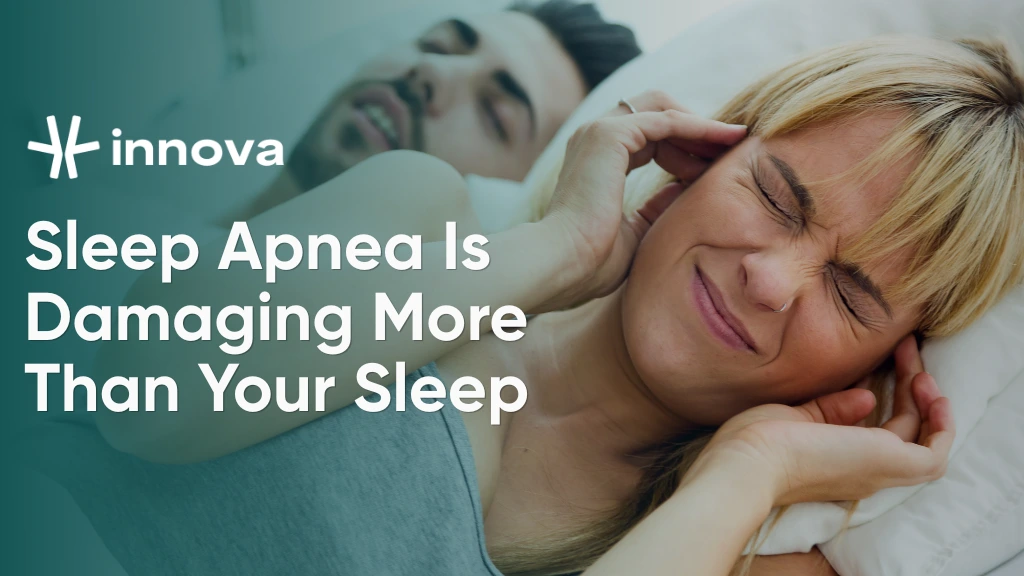
Snoring is the most obvious symptom. It is also one of the most disruptive. A partner sharing a bed with someone who snores is losing sleep every night, not from their own condition, but from their partner’s. Research shows that bed partners of people with untreated sleep apnea lose an average of one hour of sleep per night. That is nearly two weeks of lost sleep per year.
Sleep deprivation in the non-snoring partner produces real consequences: irritability, lower emotional tolerance, reduced empathy, and diminished ability to resolve conflict. Arguments that might otherwise be handled calmly become harder to navigate when both people are running on insufficient sleep.
A study examining couples where one partner had obstructive sleep apnea found that 41% reported sleeping separately at least some of the time. The same study found that 63% of people with severe sleep apnea reported relationship problems directly connected to the condition.
The effects extend beyond sleep. Untreated sleep apnea is associated with reduced libido and sexual dysfunction in both men and women. Intimacy requires energy, presence, and emotional availability, all of which erode under chronic sleep deprivation.
The research also shows a clear path forward. In a prospective study following couples through sleep apnea treatment, 72% of couples who had been sleeping in separate rooms returned to sharing a bed after treatment began. Both patients and their partners reported significant improvements in relationship quality, with 69% of patients and 74% of partners saying their personal lives had improved after treatment started.
Treatment does not just help the person with sleep apnea. It changes the dynamic for everyone in the household.
The Pattern Most People Miss
Sleep apnea rarely announces itself clearly. Most people notice the downstream effects long before they connect them to their sleep.
Tired during the day despite a full night in bed. Forgetting things more than usual. Blood pressure creeping upward. A partner mentioning snoring that gets brushed off. Mood less stable than it used to be. Feeling less sharp at work than a few years ago.
None of these things, in isolation, points directly to sleep apnea. Together, they form a recognizable picture that physicians trained in sleep medicine see routinely.
The problem is that most people interpret these as separate issues. They address the blood pressure. They take supplements for focus. They blame a busy schedule for the fatigue. The sleep apnea continues untreated and the damage continues accumulating quietly in the background.
Why a Medical Diagnosis Matters Before Starting Any Treatment
Not all sleep apnea is the same. The condition ranges from mild to severe, and the right treatment depends on a proper diagnosis, specifically a sleep study that measures the frequency and severity of breathing disruptions throughout the night.
A formal diagnosis also matters for insurance. Most medical insurance plans cover oral appliance therapy for sleep apnea under durable medical equipment benefits when a physician has documented the diagnosis through an accredited sleep study.
Going directly to an over-the-counter mouthguard without a diagnosis is not treatment. Those devices are not custom fitted and are not calibrated to your specific anatomy or the severity of your airway collapse. You may feel like you are addressing the problem while the underlying condition continues.
A medically guided process starts with a sleep study, produces a physician’s diagnosis, and then matches the treatment to the patient based on actual clinical findings.
Sleep Apnea Is Treatable Without Surgery or a CPAP Machine
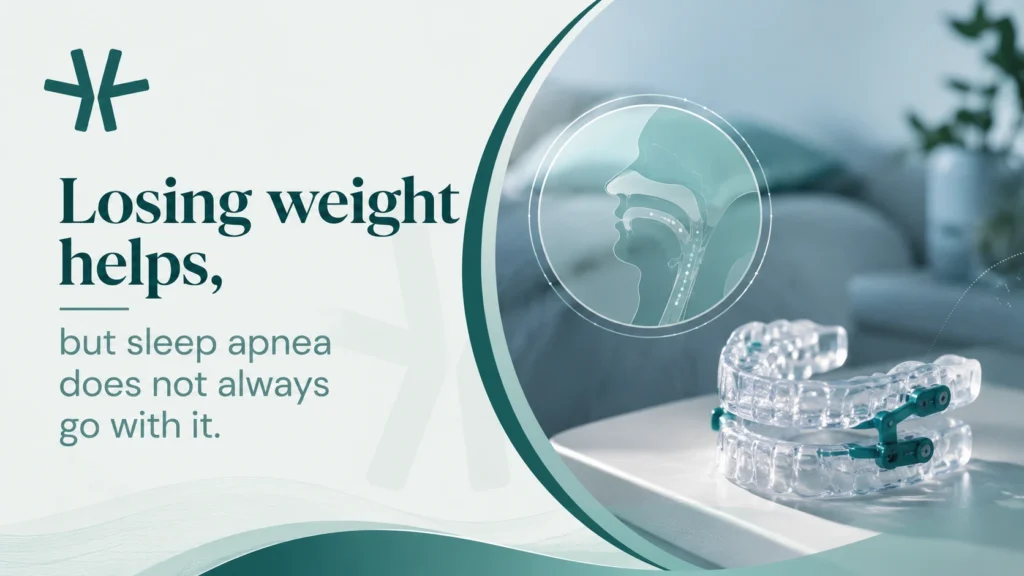
For most patients with mild to moderate obstructive sleep apnea, or for those who cannot tolerate CPAP, a custom oral appliance worn during sleep is effective, comfortable, and covered by most major insurance plans.
The appliance works by repositioning the jaw during sleep to keep the airway open, preventing the airway collapse that drives the breathing disruptions and all the health consequences that follow. There are no masks, no hoses, no noise. It is small enough to travel with and comfortable enough that patients actually wear it.
People who complete treatment consistently report sleeping better, feeling more alert during the day, and noticing real improvements in mood, memory, and energy. Their partners sleep better too.
Ready to Sleep Better?
If you recognize these symptoms, the fatigue, the snoring, the partner sleeping in another room, the blood pressure your doctor keeps watching, that recognition is worth acting on.
Innova Sleep provides medically guided, non-invasive sleep apnea treatment using custom oral appliance therapy. The process starts with a proper diagnosis and ends with a treatment plan built specifically for you, supported by most major insurance plans.
Schedule your consultation today.