
Blood pressure that does not respond to medication the way it should is one of the most frustrating clinical situations a patient can face. Diet is clean. Exercise is consistent. The prescription is filled every month. And yet the numbers stay high.
For a significant number of people in that situation, the reason is not the medication, the diet, or the lifestyle. It is something happening every night while they sleep that no one has examined yet. Sleep apnea and high blood pressure are more deeply connected than most patients are ever told, and understanding that connection changes what the right treatment looks like.
What Is the Link Between High Blood Pressure and Sleep Apnea?
The relationship between obstructive sleep apnea and hypertension is bidirectional. Sleep apnea drives blood pressure up through a documented physiological mechanism, and elevated blood pressure worsens the conditions that make airway collapse more likely during sleep. Each condition makes the other harder to manage independently.
According to research indexed by the National Institutes of Health, obstructive sleep apnea affects 30 to 40% of people with hypertension. The Joint National Committee on Prevention, Detection, Evaluation, and Treatment of High Blood Pressure formally lists obstructive sleep apnea as one of the recognized secondary causes of hypertension. Up to 80% of people with resistant hypertension, meaning blood pressure that remains elevated despite three or more antihypertensive medications, also have obstructive sleep apnea.
These are not incidental numbers. They reflect a direct physiological relationship that has been replicated consistently across decades of cardiovascular research.
How Does Sleep Apnea Cause High Blood Pressure?
When the airway collapses during sleep, airflow stops and blood oxygen drops. The brain registers an oxygen deficit and activates the body’s emergency stress response. Adrenaline is released, heart rate accelerates, blood vessels constrict, and blood pressure spikes sharply to force oxygenated blood to the brain and vital organs. The airway reopens, breathing resumes, and the cycle begins again with the next apnea event.
In a person with moderate to severe obstructive sleep apnea, this sequence can repeat dozens to hundreds of times per night. Each event produces a blood pressure surge. Over weeks and months, those repeated surges establish a chronically elevated baseline that persists throughout the day, even when breathing is entirely normal during waking hours.
A secondary mechanism compounds this significantly. In healthy individuals, blood pressure follows a natural nocturnal rhythm, dropping 10 to 20% during sleep to give the cardiovascular system restorative time overnight. People with untreated obstructive sleep apnea frequently lose this nocturnal dip entirely. Research consistently shows that non-dipping blood pressure, where nighttime readings remain as high as daytime readings, is significantly more prevalent in people with untreated sleep apnea. This non-dipping pattern carries a higher cardiovascular risk than standard daytime hypertension, and it is directly caused by the repeated sympathetic nervous system activation that apnea events produce.
What Comes First: Sleep Apnea or High Blood Pressure?
This is one of the most commonly asked questions on this topic and one the research addresses clearly. Sleep apnea can produce hypertension in people who had normal blood pressure before. The mechanism is well established: repeated oxygen drops and stress hormone surges create lasting changes in vascular tone and autonomic nervous system regulation that elevate blood pressure independently of other risk factors.
High blood pressure, in turn, can worsen sleep apnea through a different mechanism. Fluid retention, which is a consequence of both hypertension and related metabolic conditions such as heart failure and diabetes, can accumulate in the soft tissues of the neck overnight as a person lies flat. This fluid redistribution physically narrows the upper airway, increasing the likelihood and severity of airway collapse during sleep.
The result for many patients is a cycle where each condition amplifies the other, and where treating only one without evaluating the other leaves the underlying problem partially unaddressed.
Can High Blood Pressure from Sleep Apnea Be Reversed?
For patients whose hypertension is driven or significantly worsened by untreated obstructive sleep apnea, treating the sleep apnea produces measurable blood pressure improvement in the majority of cases. The degree of improvement depends on severity of the apnea, how long it has been untreated, and consistency of treatment use.
Clinical research published in respiratory medicine journals has consistently found that treating obstructive sleep apnea produces significant reductions in both daytime and nighttime blood pressure, with the greatest effect seen in patients with resistant hypertension and in those who used treatment for the highest number of hours per night. Some patients in these studies were able to reduce antihypertensive medication dosage or frequency after sleep apnea treatment was established and maintained.
The nocturnal blood pressure dip, absent in many people with untreated sleep apnea, typically returns after effective treatment is established, restoring the overnight cardiovascular recovery period that the apnea had been eliminating.
This reversal is not guaranteed for every patient. Some hypertension has causes independent of sleep apnea. But for patients whose blood pressure has not responded as expected to standard management, identifying and treating undiagnosed sleep apnea frequently changes the clinical picture significantly.
Will CPAP Lower Blood Pressure?
CPAP is the most studied treatment in the context of blood pressure improvement, and the research consistently shows benefit. By eliminating the repeated airway collapse events that drive adrenaline release and blood pressure surges, CPAP interrupts the physiological mechanism that keeps baseline blood pressure elevated overnight and during the day.
The magnitude of the benefit is directly related to how many hours per night treatment is used. Patients who achieve consistent nightly use show the most significant blood pressure reductions. Inconsistent use produces inconsistent results, and the blood pressure impact diminishes proportionally.
For patients who struggle to tolerate CPAP consistently, this is a clinically meaningful consideration. The cardiovascular benefit of sleep apnea treatment depends on the treatment actually being used. This is one reason why real-world compliance is a central factor in treatment selection, not just efficacy in controlled studies. Patients who have been living with untreated sleep apnea and its downstream cardiovascular effects need a treatment they can realistically maintain every night, not just in the first few weeks.
Custom oral appliance therapy offers a clinically validated pathway for patients who cannot achieve consistent CPAP use. Published clinical comparisons show that real-world nightly use of oral appliances is consistently higher than CPAP, and studies evaluating oral appliance therapy in patients with obstructive sleep apnea have documented blood pressure improvements alongside apnea reduction. The cumulative cardiovascular benefit over months and years, when the device is worn consistently, can be meaningful. Patients exploring this option can review the full range of non-CPAP treatment pathways and how they compare clinically.
Can Mild Sleep Apnea Cause High Blood Pressure?
Mild obstructive sleep apnea, defined as five to fourteen apnea events per hour, is associated with blood pressure effects, though the magnitude is smaller than in moderate or severe cases. Research confirms that even at lower apnea frequencies, the sympathetic nervous system activation and oxygen fluctuations produced by each event contribute to vascular changes over time.
The correlation between apnea severity and blood pressure impact is progressive. Patients with mild apnea who also have other cardiovascular risk factors, including obesity, diabetes, or family history of hypertension, face compounded risk from even modest apnea frequencies. This makes evaluation relevant not only for patients with obvious severe symptoms but for anyone with blood pressure that is trending upward alongside risk factors associated with sleep apnea.
The Signs That Sleep Apnea May Be Behind Your Blood Pressure Problems
Sleep apnea is frequently undiagnosed because the most directly observable events, airway collapse and oxygen drops, occur during sleep when the person is unaware. What appears during waking hours are the secondary effects, most of which can be attributed to other causes.
The clinical pattern that suggests sleep apnea may be contributing to blood pressure problems includes blood pressure that remains elevated despite medication and lifestyle changes, blood pressure that is notably higher in the morning than later in the day, snoring that a partner has noticed, waking unrefreshed despite adequate sleep, persistent daytime fatigue, and morning headaches that resolve as the day progresses.
Patients who have been dismissing loud snoring as a non-medical issue should be aware that snoring is the most common visible indicator of obstructive sleep apnea, and it frequently coexists with exactly these blood pressure patterns.
Why Airway Anatomy Matters in Cardiovascular Risk
The connection between sleep apnea and hypertension is ultimately an airway problem producing a cardiovascular consequence. The structural geometry of the upper airway, including the position of the jaw, the size of the tongue relative to the oral cavity, the length of the soft palate, and the width of the pharynx, determines how vulnerable the airway is to collapse when muscle tone drops during sleep.
For patients with anatomically narrow airways or a recessed jaw, this structural vulnerability exists regardless of weight or other modifiable factors. It is present every night, producing apnea events, stress hormone surges, and blood pressure spikes on a chronic, cumulative basis.
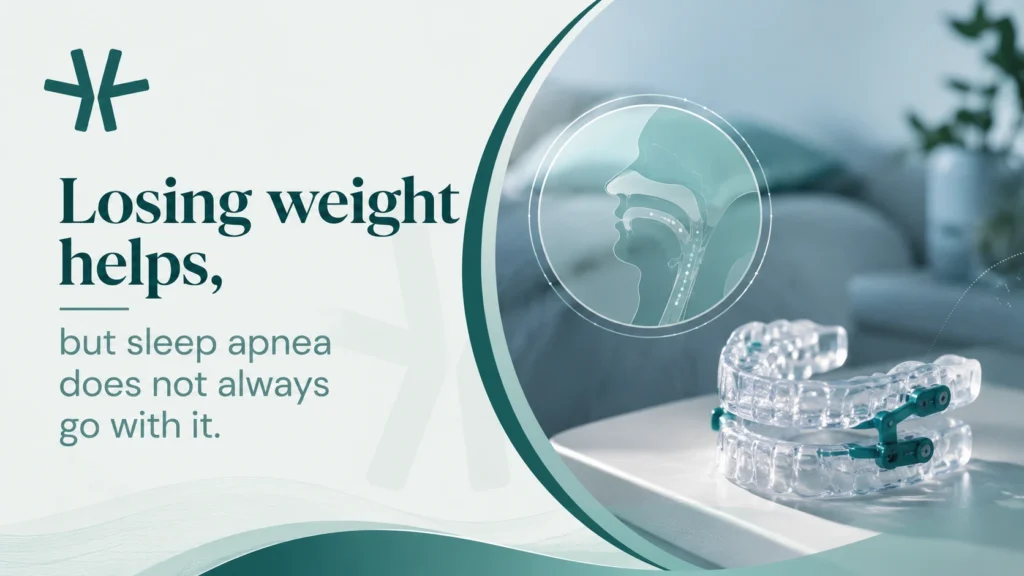
Addressing that structural vulnerability directly is what a custom oral appliance does. By repositioning the jaw forward during sleep, it maintains the airway opening that anatomy would otherwise allow to close. The device needs to be fitted precisely, titrated to the individual patient’s anatomy, and monitored over time by a clinician with the anatomical expertise to understand what the device is doing to the upper airway. That clinical precision is what separates a properly guided oral appliance from anything available over the counter, and it is what produces the treatment consistency that cardiovascular benefit depends on.
If Your Blood Pressure Is Not Responding the Way It Should
If you have been managing hypertension and not getting the results you expect, or if your blood pressure has been described as difficult to control, sleep apnea may be part of the clinical picture that has not yet been examined.
Innova Sleep Institute in Brunswick, Georgia provides medically guided sleep apnea evaluation and custom oral appliance therapy for patients who want a clear answer about what is happening while they sleep. A proper diagnosis gives you and your physician the data needed to understand whether sleep apnea is contributing to your blood pressure and what treatment makes the most sense for your specific anatomy and severity.
Treating sleep apnea is one of the most meaningful cardiovascular steps available to patients whose blood pressure has not responded as expected.