Adjusting to a custom oral appliance for sleep apnea isn’t a single event. It happens in stages: getting used to wearing the device, gradually advancing its position through titration, and confirming with follow-up testing that it’s actually controlling your apnea. How long each stage takes varies from patient to patient, depending on anatomy, the specific device, and how consistently the appliance is worn. For patients in Brunswick and the Golden Isles, Innova Sleep Institute guides you through each stage rather than leaving you to work it out on your own.
What "Adjusting" Actually Means
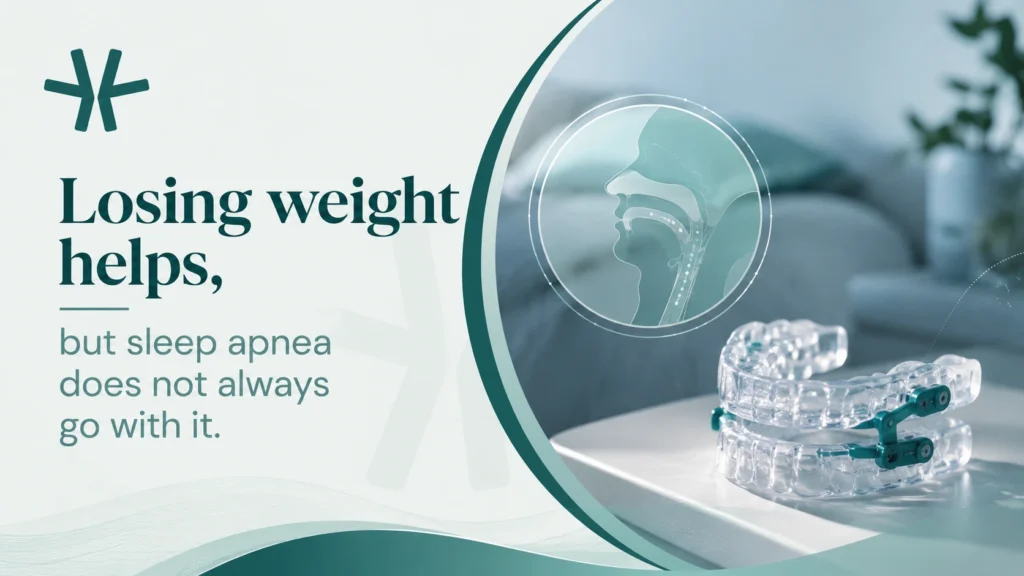
A custom oral appliance, also called a mandibular advancement device, holds the lower jaw in a slightly forward position during sleep to help keep the airway open. Unlike an over-the-counter anti-snoring guard, it’s fitted from your own dental impressions or digital scans and adjusted under clinical supervision, not something you configure yourself.
“Adjusting” isn’t one process. It’s three distinct stages, each with its own purpose, and each worth understanding separately rather than as one blurred timeline. If you’re still weighing oral appliance therapy against CPAP, that decision and the adjustment period below are closely related.
Stage 1: Getting Used to Wearing the Appliance
The first stage is simply adapting to sleeping with a device in your mouth. Early on, you may notice jaw or tooth soreness, an open-mouth feeling, or increased drooling. This is consistent with SingHealth Sleep Centre patient information, which describes these early effects as easing during a wearing-in period, though how long that takes varies by patient and device.
Some patients also notice their bite feels slightly different when the appliance is removed in the morning. This is generally described as a normal, temporary sensation during the wearing-in period, and it’s one of the things your provider checks for at follow-up visits, rather than something to self-diagnose.
Stage 2: Titration
Once you’re wearing the appliance regularly, your provider begins titration: gradually increasing the jaw-advancement position in small increments based on your comfort and response. This is the most closely supervised stage, since the goal is a position that manages your apnea without unnecessary discomfort.
In practice, titration usually means periodic visits where your provider checks how you’ve tolerated the current position, asks about symptoms like snoring or daytime tiredness, and adjusts the device incrementally if needed.
Titration timelines vary by patient, device, and provider protocol. As one reference point, the same SingHealth Sleep Centre patient information describes a titration period of four to six months for their specific oral appliance protocol, a figure that reflects their program rather than a standard timeline every patient should expect. Other clinics and devices report different timelines. Ask your Innova provider directly what titration typically looks like for your specific device and case.
Stage 3: Follow-Up Testing
Feeling more rested, noticing less loud snoring, or feeling comfortable with the appliance are good signs, but they don’t on their own confirm your sleep apnea is adequately controlled. Apnea events can still occur even when a patient feels subjectively better, since symptom relief and objective airway control aren’t always the same thing. That’s why a follow-up sleep study, done once titration has reached a stable position, is used to objectively confirm the appliance is controlling apnea events before treatment is considered complete.
A follow-up sleep study can be an in-lab study or, when appropriate, a home sleep test, depending on your original diagnostic pathway and your provider’s recommendation. If the results show apnea events are still occurring at an unacceptable level, further titration or a reassessment of the treatment plan follows. This is a normal part of the process, not a sign the appliance has failed.
Caring for Your Appliance During Adjustment
General care habits that support comfort and results during this period include the following, though you should always follow the specific instructions your Innova provider gives you for your device:
- Clean the appliance daily as instructed by your provider, since buildup can affect fit and hygiene
- Avoid exposing the appliance to hot water or heat sources, which can warp the material
- Store it in its case when not in use to prevent damage
- Bring it to every follow-up visit so your provider can check fit and wear patterns, not just ask how it feels
These habits don’t shorten titration, but they help your provider assess your progress accurately at each visit, and your provider’s specific instructions always take priority over general guidance like this.
Factors That Can Influence Your Timeline
No two patients adjust at exactly the same pace. Some of the factors that can affect how long wearing-in and titration take include:
- Individual jaw anatomy and how much advancement is needed to manage your specific apnea
- The type and design of the oral appliance being used
- Existing dental work, missing teeth, or jaw joint sensitivity
- How consistently the appliance is worn each night, since inconsistent use can slow how quickly a provider can judge your response
- Whether any additional adjustments are needed to address discomfort along the way
Because these factors are individual, a timeline that worked for another patient isn’t necessarily a reliable guide for your own case.
When to Contact Your Provider
Reach out to your provider if you notice:
- Jaw pain that is sharp, severe, or doesn’t ease between wearings
- Visible changes in how your teeth fit together that concern you
- The appliance loosening, cracking, or not seating properly
- Persistent snoring or daytime symptoms despite consistent use over an extended period, since ongoing symptoms may mean the current position isn’t fully effective yet
Titration adjustments, appliance repairs, and bite checks are a normal part of ongoing oral appliance care, not a sign that something has gone wrong.
Common Questions About Adjusting to an Oral Appliance
Is some discomfort every night normal during adjustment?
Mild soreness or an unfamiliar feeling early on is commonly reported, but discomfort that is severe, worsening, or not improving over time is a reason to contact your provider rather than continue as is.
Can I stop wearing the appliance if it feels uncomfortable during titration?
Any concerns about discomfort should go through your provider rather than being managed by stopping use on your own, since consistent wear is part of how titration is tracked and adjusted.
Does insurance cover titration visits and follow-up testing?
Coverage varies by plan and provider. Ask Innova’s team directly about your specific coverage as part of your evaluation, so you know what to expect before you start.
How Innova Supports You Through the Process
Innova Sleep Institute’s process for oral appliance therapy follows a clinical path from evaluation and diagnosis through custom fitting, titration, and follow-up testing. Rather than handing over a device and leaving adjustment to guesswork, each stage, wearing-in, titration, and confirmation testing, is guided by your provider. If CPAP struggles are part of what brought you here, that same evaluation is where your specific adjustment timeline gets discussed.
Adjusting to an oral appliance is a process, not a one-time fitting. If you’re not sure what to expect from wearing-in, titration, or follow-up testing, that’s exactly the kind of question worth asking before you start.