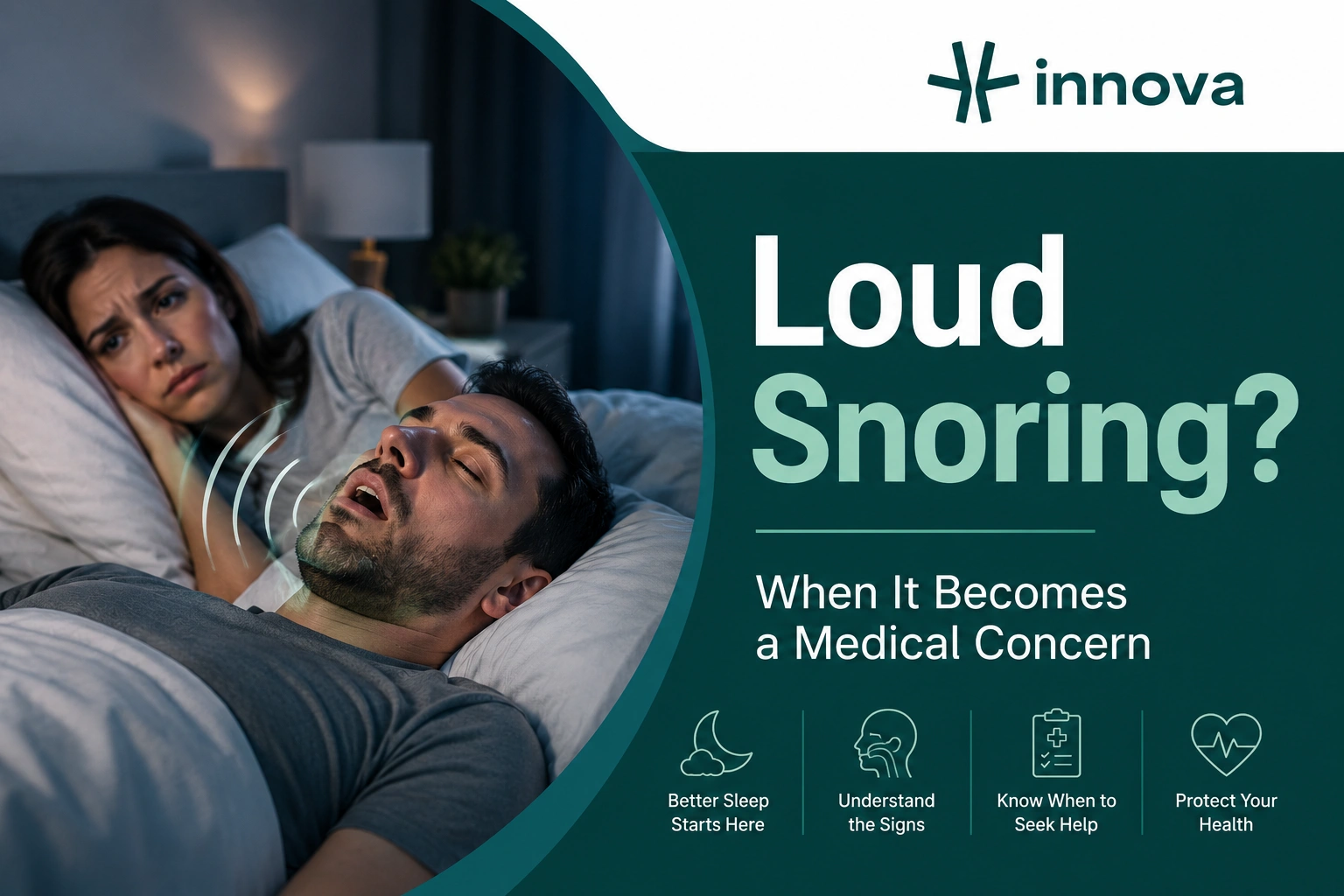
Loud snoring is easy to dismiss. It becomes background noise in a household, something partners and family members quietly accommodate while the person doing the snoring sleeps right through it, completely unaware.
But snoring is also the number one reason people seek out a sleep doctor. Not because snoring itself is always dangerous, but because it is often the first and most obvious sign that something is happening in the airway during sleep that should not be.
The difference between snoring that is harmless and snoring that reflects a serious underlying condition comes down to what is happening behind the sound. By the end of this, you will know what causes snoring, what separates primary snoring from obstructive sleep apnea, which warning signs matter, and when the right move is to stop guessing and get a proper evaluation.
What Actually Causes Snoring?
Snoring is the sound produced when airflow through a narrowed or partially obstructed upper airway causes the soft tissues in the throat to vibrate. During waking hours, the muscles surrounding the airway keep it open. During sleep, those muscles relax. When they relax enough, the airway narrows, and the tissue vibrates as air passes through under pressure.
The loudness and frequency of snoring depend on several factors: the degree of airway narrowing, the position of the jaw and tongue during sleep, the size and tone of the soft palate and uvula, and whether the person breathes through the nose or the mouth. People with a recessed lower jaw, a naturally narrow pharynx, or a large tongue relative to their oral cavity tend to snore more consistently and more loudly than those without these structural characteristics.
Snoring is a sound. What it tells you about what is happening to the airway behind that sound is what matters clinically.
Not All Snoring Is the Same
Primary snoring, sometimes called simple snoring, is the first category. The soft tissues vibrate and produce sound, but the airway is not fully collapsing and oxygen levels are not dropping. The person snores but their sleep architecture remains largely intact. Primary snoring can disrupt a bed partner’s sleep significantly, but it does not carry the same physiological risk as obstructive sleep apnea.
Snoring associated with obstructive sleep apnea is clinically different in a meaningful way. Here, the airway does not just narrow. It collapses partially or completely, stopping airflow entirely. The brain detects the oxygen drop and sends an emergency signal that jolts the body partially awake to reopen the airway. The person rarely remembers these events, but they can occur dozens to hundreds of times per night. Each one places real physiological stress on the heart, brain, and nervous system.
According to the National Heart, Lung, and Blood Institute, snoring is often a sign of obstructive sleep apnea and is the primary reason most people seek out a sleep doctor, even when there are no other obvious disruptions in their daily lives. The sound is the warning signal. The question is whether the person hearing about it is taking it seriously.
How Common Is Snoring and How Often Does It Indicate Sleep Apnea?
Roughly 25% to 50% of adults snore regularly, according to sleep medicine research published by SleepApnea.org. Among those who snore loudly and frequently, the likelihood of obstructive sleep apnea increases substantially. Not every loud snorer has sleep apnea, and not every person with sleep apnea snores loudly. The two conditions overlap significantly enough that loud, habitual snoring warrants clinical evaluation rather than reassurance.
The loudness of snoring alone does not determine severity. Research from the National Heart, Lung, and Blood Institute indicates that paradigms are shifting in how snoring volume is understood: some people with very loud snoring have relatively mild sleep apnea, while others with quieter breathing disruptions have severe airway obstruction. Volume is a signal, not a diagnosis. Only a sleep study can determine what is actually happening during the night.
The Warning Signs That Snoring Has Become a Medical Concern
Snoring without any accompanying symptoms is less likely to indicate obstructive sleep apnea than snoring that clusters with other clinical signs. The indicators below are what physicians use to distinguish snoring that needs evaluation from snoring that reflects a more serious underlying condition.
Breathing That Pauses, Gasps, or Restarts During Sleep
This is the most significant warning sign, and the one most commonly noticed by a partner rather than the person snoring. When the airway collapses during an apnea event, airflow stops entirely. The silence that follows a snoring episode, broken by a gasp or snort as the airway reopens, is one of the most recognizable patterns of obstructive sleep apnea. If someone close to you has mentioned that you stop breathing during the night, even briefly, that is a clinical symptom that warrants prompt evaluation.
Waking Exhausted After a Full Night of Sleep
Feeling unrested after seven or eight hours in bed is one of the most consistent complaints among people with undiagnosed sleep apnea. Apnea events throughout the night repeatedly pull the body out of deep restorative sleep without any conscious awareness. The cumulative effect is a fragmented sleep architecture that leaves the person chronically fatigued regardless of how many hours they spend in bed.
Morning Headaches and Dry Throat on Waking
Morning headaches in people with sleep apnea result from repeated drops in oxygen and corresponding rises in carbon dioxide during apnea events throughout the night. Waking with a dry mouth or sore throat is often the result of sustained mouth breathing during sleep, which becomes more common when nasal airflow is restricted and the airway is compromised.
Difficulty Concentrating and Memory Problems
The brain does critical memory consolidation work during deep and REM sleep. When apnea events repeatedly interrupt those sleep stages, cognitive function suffers in measurable ways. People with undiagnosed sleep apnea frequently report difficulty retaining new information, losing track of tasks, struggling to concentrate, and feeling mentally slower than they used to be. These are neurological consequences of disrupted sleep architecture, not lifestyle symptoms.
Irritability, Mood Changes, and Relationship Strain
Chronic sleep deprivation from untreated sleep apnea produces mood changes that are often attributed to stress, work pressure, or personality. Irritability, reduced emotional tolerance, and withdrawal from engagement are consistent patterns in people who are not getting restorative sleep. Partners who are also losing sleep because of snoring experience similar effects, which compounds the relational impact over time.
Can You Be a Loud Snorer and Not Have Sleep Apnea?
Loud snoring does not automatically confirm a sleep apnea diagnosis. Primary snoring, in which tissues vibrate and produce significant noise without the airway fully collapsing, is a real and distinct clinical category. Someone can snore loudly enough to wake a household and still have oxygen levels that remain stable throughout the night.
Loud habitual snoring should not be dismissed on that basis alone. The only way to confirm whether snoring is primary or apnea-related is a sleep study that measures airflow, oxygen saturation, respiratory effort, and sleep stages simultaneously. Assuming it is harmless without clinical confirmation is not a sound approach, particularly given what the research shows about the long-term consequences of untreated obstructive sleep apnea.
How Do You Tell If Your Snoring Is Sleep Apnea?
No symptom checklist replaces a sleep study, but several patterns consistently point toward obstructive sleep apnea rather than primary snoring. Snoring that is loud and occurs most nights rather than occasionally. Snoring accompanied by observed pauses, gasping, or choking. Snoring combined with significant daytime fatigue despite adequate sleep time. Snoring in a person with a recessed jaw, a short or wide neck, or excess weight concentrated in the upper body. Snoring that has worsened over time or become noticeably louder in recent years.
Any one of these patterns, and particularly combinations of them, makes a clinical evaluation the appropriate next step rather than continued watchful waiting.
What Type of Snoring Is Dangerous?
Snoring that reflects recurrent airway collapse during sleep carries the most clinical risk. Each apnea event that accompanies airway collapse triggers a physiological stress response: a release of adrenaline, a spike in heart rate, and a surge in blood pressure. When these events occur dozens to hundreds of times per night over months and years, the cumulative cardiovascular and neurological burden is real and progressive.
Untreated obstructive sleep apnea is associated with elevated risk of hypertension, atrial fibrillation, stroke, cognitive decline, and metabolic disruption. The snoring itself is not the danger. What the snoring signals about the underlying airway is what carries the clinical risk.
Why Airway Anatomy Is Central to Understanding Snoring
Snoring and obstructive sleep apnea are fundamentally airway problems. The structural geometry of the upper airway, including the position of the jaw, the size of the tongue relative to the oral cavity, the length and tone of the soft palate, and the width of the pharynx, determines how much margin exists before the airway collapses under the relaxed muscle tone of sleep.
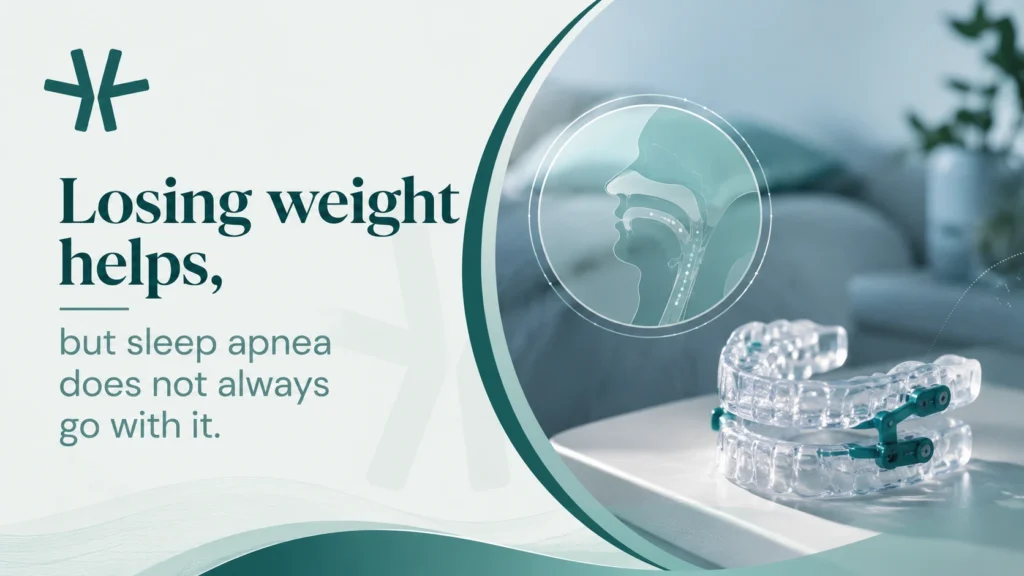
This is where the expertise of an oral and maxillofacial surgeon becomes directly relevant to sleep apnea evaluation and treatment. Understanding the jaw, the palate, the pharyngeal space, and how a custom oral appliance changes the position and geometry of those structures during sleep requires anatomical training that goes well beyond general clinical assessment. A custom oral appliance repositions the jaw forward during sleep, maintaining the airway opening that anatomy would otherwise allow to close. The fit, calibration, and ongoing titration of that appliance depend entirely on a precise understanding of the patient’s specific airway structure.
That is the clinical difference between a properly guided oral appliance and a generic mouthpiece from a pharmacy shelf.
Stop Guessing and Get a Clear Answer
Snoring that disrupts your sleep, your partner’s sleep, or both is not something to keep putting off.
Innova Sleep Institute in Brunswick, Georgia, works with patients who have been living with these symptoms for years without answers. If you have been waking up exhausted, if your breathing has been mentioned by someone close to you, or if your snoring has been getting louder and more frequent, a proper evaluation gives you a clear picture of what is actually happening while you sleep.
You do not have to keep wondering whether it is something serious.
Call (912) 400-6914 to schedule your consultation.