CPAP is one of the most effective treatments available for obstructive sleep apnea when it’s used consistently. The challenge is that a meaningful number of patients struggle to use it every night, and untreated sleep apnea carries real health risks even when a CPAP machine is sitting on the nightstand.
For some patients, a custom oral appliance, often searched for as a “sleep apnea mouth guard,” offers a clinically supported alternative worth discussing with a sleep specialist. This is not the same device as an over-the-counter anti-snoring guard from a pharmacy shelf. It’s a custom-fitted medical device, prescribed and monitored by a clinician, and it isn’t right for every patient or every case of sleep apnea.
Below, how the two compare, who tends to be a good fit for an oral appliance, and what the switch actually looks like, so you have a clearer picture before your evaluation. This is especially relevant if you’re in Brunswick or the Golden Isles and weighing your options.
What Is a Sleep Apnea Mouth Guard, Exactly?
The term “sleep apnea mouth guard” is commonly searched, but the more accurate clinical name is a custom oral appliance, or mandibular advancement device (MAD). The distinction matters:
- An OTC anti-snoring guard is a one-size-fits-most product, not diagnosed or monitored, and not intended to treat diagnosed obstructive sleep apnea.
- A custom oral appliance is fabricated from a patient’s own dental impressions or digital scans, prescribed after a sleep apnea diagnosis, and adjusted (titrated) over time by a clinician based on how the patient responds.
CPAP Works, But Only When It's Used
CPAP (continuous positive airway pressure) keeps the airway open by delivering pressurized air through a mask, and it remains a first-line, highly effective treatment for obstructive sleep apnea when used consistently and correctly.
The difficulty is adherence. Research published through the National Institutes of Health has found that a substantial share of patients, commonly cited at around a third, though estimates vary across studies, discontinue CPAP within the first year. Common barriers include mask discomfort, difficulty maintaining a seal, pressure intolerance, claustrophobia, and the practical demands of nightly cleaning and travel.
This isn’t a failure on the patient’s part. It’s a signal that the treatment plan may need to be revisited, and for appropriate patients, that conversation can include oral appliance therapy.
What a Custom Oral Appliance Does
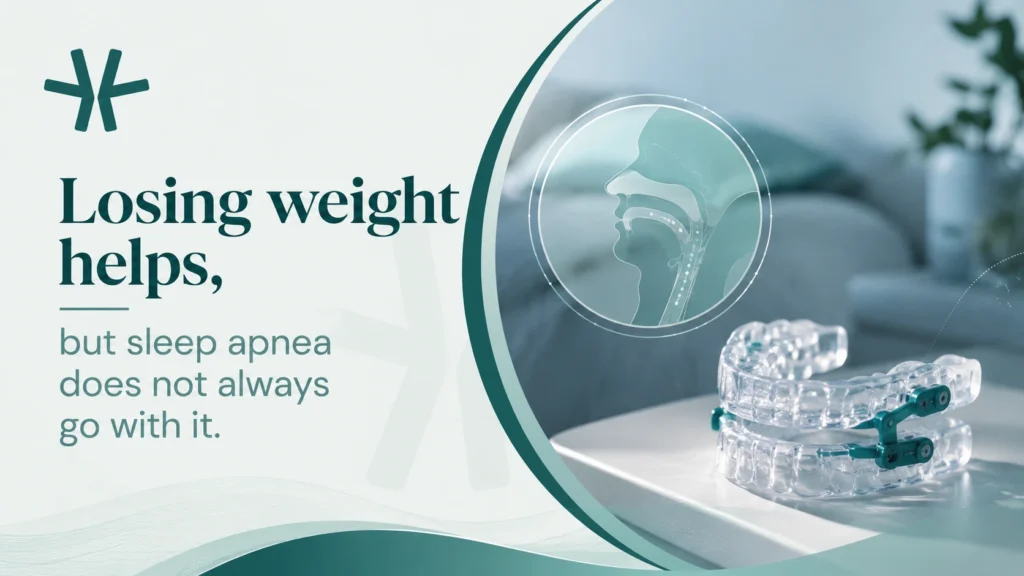
A custom oral appliance holds the lower jaw in a slightly forward position during sleep. This repositioning is intended to help keep the tongue and soft palate from collapsing back into the airway, supporting more open breathing space overnight.
The device is fitted over the upper and lower teeth and adjusted incrementally, a process called titration, based on the patient’s symptoms and follow-up testing. This clinician-guided titration is what separates a properly prescribed device from any appliance purchased without an evaluation.
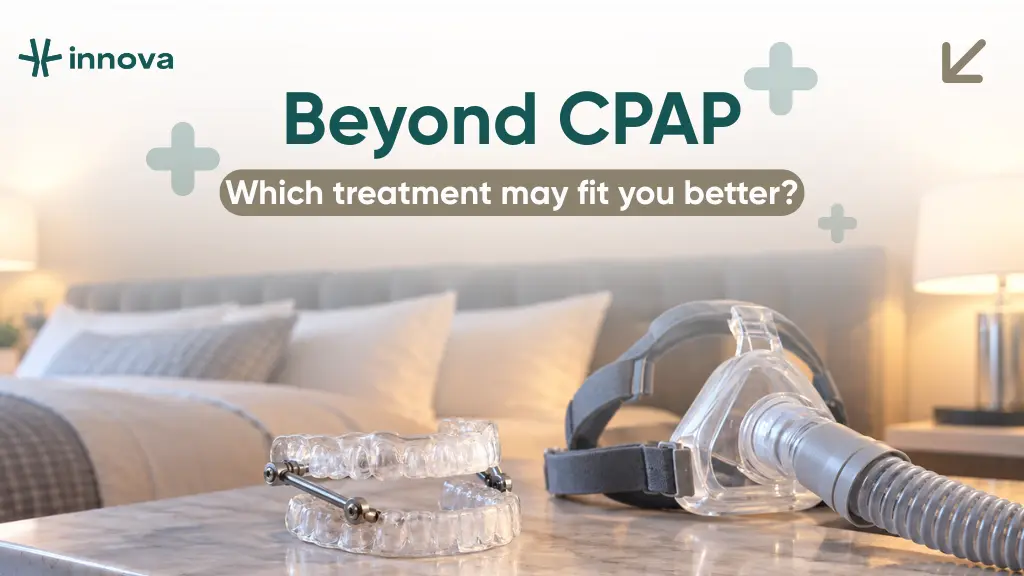
CPAP and oral appliance therapy address the same underlying problem, an airway that narrows or collapses during sleep, using different mechanisms: air pressure versus jaw repositioning. Neither is universally “better.” The right choice depends on the patient’s anatomy, apnea severity, and ability to use the device consistently.
Who May Be a Candidate for an Oral Appliance?
Oral appliance therapy is not a fit for every patient. It tends to be considered for people who:
- Have tried CPAP across multiple mask types or pressure settings without achieving consistent nightly use
- Have mild to moderate obstructive sleep apnea (severity is one of several factors a clinician will assess)
- Travel frequently and find CPAP difficult to maintain on the road
- Would otherwise stop treating their sleep apnea altogether rather than continue with a device they can’t tolerate
The American Academy of Sleep Medicine and the American Academy of Dental Sleep Medicine jointly recognize oral appliance therapy as a recommended treatment option for adult patients with obstructive sleep apnea who are intolerant of CPAP or who prefer an alternative, while noting that CPAP remains the first-line, more effective option when it is used consistently. Sleep specialists sometimes frame this as a question of consistent use versus theoretical efficacy: a device used every night may offer more real-world benefit than one used only occasionally, even if CPAP has a higher efficacy ceiling on paper. This is a general clinical principle, not a guarantee of outcome for any individual patient.
Does It Work for Mild, Moderate, or Severe OSA?
Oral appliance therapy is most often considered for mild to moderate obstructive sleep apnea, and can also be an option for select severe cases depending on anatomy and other clinical factors. Severity alone doesn’t determine candidacy. A sleep study and clinical evaluation are needed to know whether an oral appliance is likely to adequately control a specific patient’s apnea, or whether CPAP or a combination approach is more appropriate.
Is a Sleep Study Required?
Yes. A diagnosis, from an existing sleep study or a newly arranged one, including home sleep testing when appropriate, is required before any treatment, including oral appliance therapy, is prescribed. After a custom appliance is fitted and titrated, a follow-up sleep study is typically used to confirm its adequately controlling apnea events before CPAP is formally discontinued.
Switching From CPAP Requires Clinical Oversight
Stopping CPAP on your own, without a physician-guided plan and a verified replacement in place, leaves a gap in treatment, and untreated sleep apnea carries real cardiovascular and cognitive risk.
A properly managed transition generally involves:
- Clinical evaluation of dental health, jaw anatomy, and airway geometry
- Custom impressions or digital scans and device fabrication
- Fitting, followed by a titration period of adjustments based on symptoms and monitoring
- A follow-up sleep study to confirm the appliance is controlling apnea adequately
- Ongoing monitoring for changes in apnea severity or the device’s fit over time
Which Patients Tend to Respond Well, and Which May Not
Some anatomical features, such as a retruded lower jaw or a tongue that falls back during sleep, are often associated with a more favorable response to jaw repositioning, though this varies by patient and can only be confirmed through a clinical evaluation, not self-assessment.
Oral appliance therapy is less likely to be the sole solution for patients with central sleep apnea (rather than obstructive), significant soft-tissue obstruction, or temporomandibular joint (TMJ) conditions that limit comfortable jaw advancement. A clinician will assess which factors apply before recommending a device.
If loud snoring alongside CPAP difficulties sounds familiar, that symptom pattern can be a useful starting point for discussing candidacy. For a broader look at options beyond CPAP, see sleep apnea treatment without CPAP.
A Treatment You Can Actually Use, Evaluated Properly
Untreated sleep apnea carries the same long-term risks whether the cause is a missed diagnosis or an intolerable CPAP mask. If CPAP hasn’t worked for you, the right next step isn’t to stop treatment. It’s to have your specific situation evaluated.
Innova Sleep Institute, serving Brunswick and the Golden Isles, provides medically guided evaluation for obstructive sleep apnea, including custom oral appliance therapy for patients whose anatomy and clinical picture make it an appropriate option.
If CPAP hasn’t been a sustainable fit for you, we can help you understand whether a custom oral appliance is worth exploring.